Guide
Padel shots: bandeja, vibora, smash and glass play step by step
Padel is quick to pick up, but your shots decide how far you get. This guide walks through each one in order: what it does, when to use it, how to hit it and the mistake players make most often. It is written for social players who want a clear step up without rebuilding their whole game.
First, understand why the shots exist
Almost every padel point comes down to one thing: which pair holds the net. The team at the net wins the majority of points at every level, because they hit down while their opponents hit up. Every shot in this guide exists either to keep that net position or to take it away.
That is why technique without tactics rarely pays off. A perfect smash that leaves you out of position is worse than a plain bandeja that keeps you forward. If you have not looked at the court geometry, the guide to padel court dimensions explains why the angles behave the way they do.
Every padel shot at a glance
The padel serve is underhand, after one bounce, below waist height and played diagonally. The goal is not an outright winner but reaching the net with control. Aim low towards the side glass so the return is awkward.
Short movement, racket in front of the body, no big swing. The volley is the workhorse at the net. Block the ball and direct it at the feet of whichever opponent is deepest.
The shot that lets you stay forward when the ball is lifted over you. Meet the ball at shoulder height with slice and a sideways motion. It should land deep and bounce low rather than hard.
The faster cousin of the bandeja, with more side spin. The ball hugs the side glass and becomes hard to lift cleanly. It needs an early preparation, otherwise control disappears.
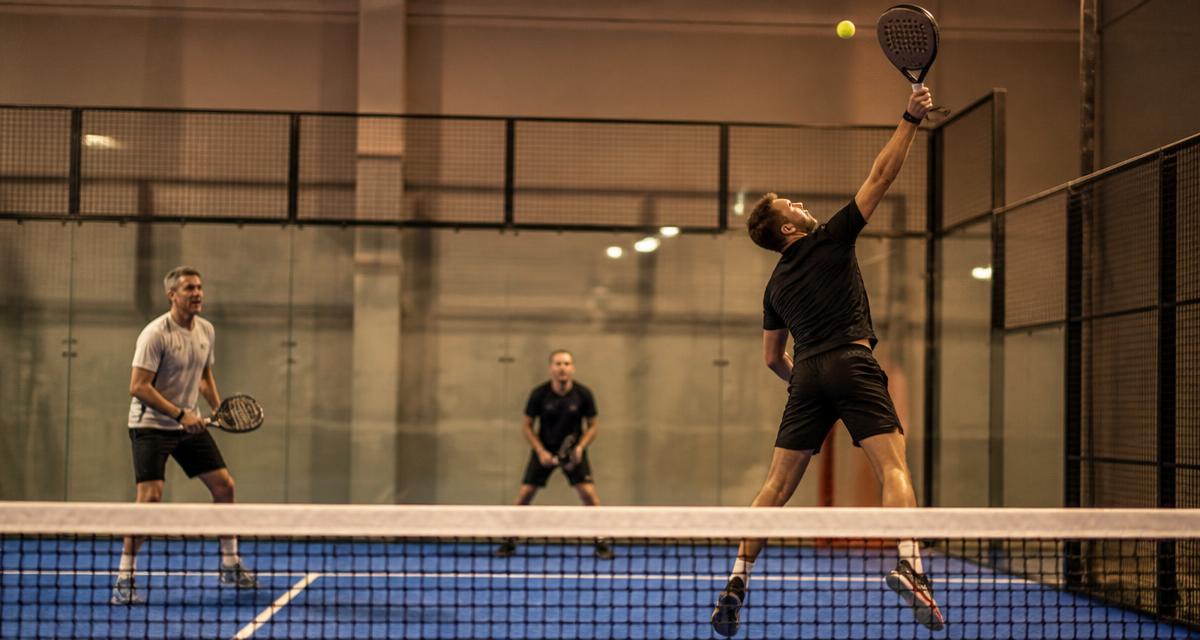
Use the smash when the ball is genuinely short and you are close to the net. Aim either flat between your opponents or into the back glass to send the ball out of the court. More points are lost to rushed smashes than won by them.
A low, slow ball played from the baseline down at your opponents' feet. The point is not to win the rally but to force a weak volley so your pair can take the net.
Balls off the back glass are padel's signature. Track the ball with your body, give yourself room backwards and hit it as it comes out of the wall. This is the shot that separates level 3 from level 5.
The serve: simple wins
The ball must bounce once before you hit it, contact has to be below waist height and your foot must stay behind the baseline. Many beginners try to hit hard. That produces double faults against an opponent who returns anyway. A calm serve that slides low into the side glass actually buys you more time to move up.
- Drop the ball in front of you and strike it on the way up from the bounce.
- Aim for the outer corner of the service box so the ball carries into the glass.
- Move forward immediately after contact, not after you see the return.
- Hitting the glass before the service line is a fault, see the rules below.
Unsure how points count when serving sides change? The scoring guide covers game, set and golden point, and the padel rules handle the situations people argue about most.
The volley: short motion, early contact
The volley is the shot you play most once your pair holds the net. Keep the racket up in front of your body, meet the ball ahead of your feet and let your body do the work instead of your arm. Think block, not swing. A volley rarely needs more pace than the ball arriving at you.
Two habits matter most. First, keep it low: a volley landing deep and flat forces your opponent to lift. Second, always play to the weaker player or down the middle, where pairs hesitate about who takes the ball.
Bandeja: the shot that makes you a level 5
When opponents lift the ball over your head you have three options: retreat and give up the net, smash and hope, or play a bandeja. The bandeja is the compromise that keeps you forward. You meet the ball at shoulder height with an out and down motion, adding slice so the ball stays low after the bounce.
- Turn sideways to the net the moment the ball is lifted, before you start moving back.
- Contact the ball in front of you and slightly above the shoulder, not overhead.
- Aim deep into your opponent's back corner rather than at their feet.
- Move back towards the net after the shot instead of standing still to watch.
The most common mistake is hitting the bandeja at full power. The ball lands short, bounces high and comes back as an easy attack. The bandeja should be boring and effective.
Vibora and smash: when you get to decide
The vibora is played much like the bandeja but with more side spin and a faster motion. The ball crawls along the side glass and is hard to lift cleanly. Use it when the ball arrives slightly shorter than a typical bandeja ball and you can step into the court.
Save the smash for balls that are genuinely short. Two versions will serve you for a long time: a flat smash down between your opponents, and a smash into the back glass that sends the ball out of the court. Smashing every high ball loses more points than it wins, especially at level 4 to 6 where opponents have time to recover.
Glass play: the biggest level jump
Playing balls off the back glass is the clearest difference between padel and tennis, and it is where most players give away free points. The key is space. Track the ball with your body, move back past the point where you expect the bounce, and hit it as it travels out of the wall towards you.
- Turn sideways to the glass early so you can see both ball and wall.
- Give yourself more room than you think you need, you can always step in.
- Lift the ball high and deep when under pressure, it buys your pair time to reset.
- Play a chiquita at their feet when you are balanced and want to take the net.
Solid glass play means you rarely lose points outright, and it shows up quickly in your ranking once matches get closer.
How to practise shots in normal matches
You do not need booked coaching sessions to improve. Pick one shot per match and play it deliberately, even when it costs a point. Four matches with a bandeja focus give you more than twenty matches of hitting whatever feels natural.
- Matches one and two: volleys only. Short motion, deep and low.
- Matches three and four: no smashes at all. Everything high becomes a bandeja.
- Match five: every ball to the back glass gets played out of the wall, never into it.
- Match six: add a chiquita from the baseline in every point you can.
This assumes you play people at your own level. If matches are too lopsided you have no time to think or repeat anything. Read how the 1 to 10 level scale works and how to find even opponents in your city.
Practise your shots in real matches
Create a free Padelpoolen account, set your level and join public matches with open spots near you. You can also create your own match and fill the court.
FAQ about padel shots
Which shot should I learn first?
The volley and the serve. Those two let you play real points straight away. The bandeja comes next and usually opens the door from level 3 to level 5.
What is the difference between bandeja and vibora?
The bandeja is control with slice at shoulder height. The vibora is faster, with more side spin, and is used to squeeze your opponent against the side glass.
Do I need a coach?
No, but one technical session every other week gives far more repetitions than a match. Matches plus a single focus shot at a time works well without a coach too.
How do I avoid injuries as I start hitting harder?
Build shoulder and hip strength, warm up the wrist and avoid smashing with the arm alone. More on that in the guide to padel injuries and prevention.