Guide
Padel vs tennis: the differences that decide which you prefer
Padel and tennis look like cousins: the same scoring, a net in the middle and a ball that resembles a tennis ball. On court the experience is completely different. Here are the differences you actually notice the first time you play, and what they mean if you are choosing between the two.
The court: 200 square metres against 260
A padel doubles court is 20 x 10 metres and fully enclosed by glass and metal mesh. A tennis doubles court is 23.77 x 10.97 metres and open all around, with large run off areas outside the lines. The difference in area sounds small, but the enclosure changes everything: in padel the walls are part of the game, in tennis the ball is dead as soon as it passes you.
The result is longer rallies. Balls that would be winners in tennis come back off the glass, so padel rewards patience and placement over raw power. All the measurements are in our guide to padel court dimensions.
The racket: no strings, shorter handle
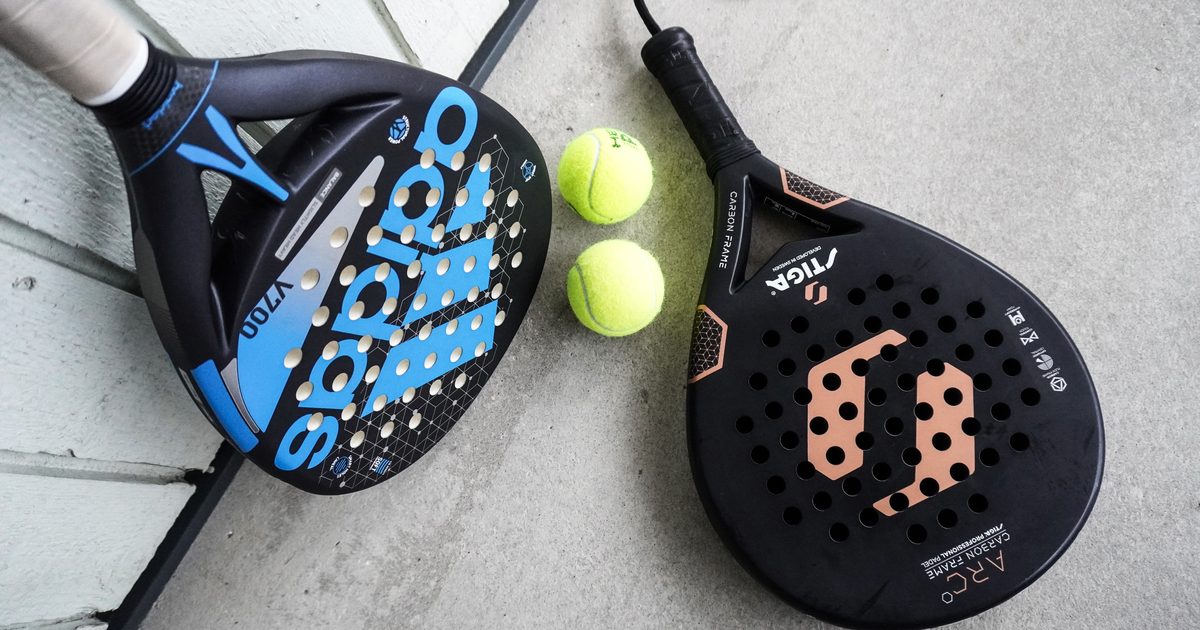
A padel racket is solid with drilled holes, has no strings and may be no longer than 45.5 centimetres including the grip. A tennis racket is around 68 centimetres with a strung head that generates both speed and spin. The shorter padel racket gives less leverage, so strokes are compact and control matters more than swing length.
For your body that means less load on the shoulder but more on the wrist and elbow if you hit hard with poor technique. The balls are nearly identical, the padel ball simply has slightly lower pressure and bounces a touch lower.
The serve: the biggest difference
In tennis the serve is a weapon. In padel it is a way to start the point. You bounce the ball, strike it at or below waist height and keep both feet behind the service line. A hard padel serve is rarely dangerous, because the receiver has time and the back glass on their side.
That single rule is what makes padel so accessible. Tennis beginners get stuck never landing a serve, while a padel beginner gets the game going immediately. More starting tips are in our padel for beginners guide.
Scoring: the same, with one exception
Padel inherited tennis scoring wholesale: 15, 30, 40, game and set. The practical difference is the golden point, where 40 all is decided by a single point instead of advantage. Matches become shorter and more predictable in length, which fits 60 or 90 minute bookings. The full system is explained in padel scoring.
Social side: four players instead of two
Tennis is usually singles, padel is almost always doubles. That is the difference you feel most off court. You need three other people to play, but in return you get a format where level gaps even out, where you talk between points and where an hour is as much company as it is training.
It is also padel's biggest practical hurdle: finding those three others. Without a fixed group you can open the match feed and take a vacant spot in a court that is already booked, or post your own slot and let others fill it.
Cost and time: count per person
An hour of court time often costs roughly the same in both sports, but in padel it is always split four ways. Add that a beginner padel racket costs less than a strung tennis racket, and that many clubs rent rackets for pocket money, and the entry cost is low. Tennis more often expects membership, coaching and restringing before it gets really enjoyable.
Which should you choose?
If you want to feel like you are playing real points on the first evening, and you like the idea of four people on a small court, choose padel. If you want to build technique over time, play one against one and swing freely with spin and pace, choose tennis. Plenty of people do both: tennis for the technique, padel because you can always get a group together on a weeknight.
Trying padel first? Read how the level scale works in our guide to finding padel players at your level, then join a match that matches yours.
Frequently asked questions
Is padel easier than tennis?
Yes, getting started is easier. A smaller court, a shorter racket, an underarm serve and walls that keep the ball alive mean you play real points right away.
Do I need a tennis background?
No. Most padel players in Sweden have never played tennis at all.
Is the scoring the same?
Yes, except that padel often uses a golden point instead of advantage at 40 all.
Which is cheaper?
Padel per person, because the court fee is split between four players and the kit costs less to get started with.